OUR PROJECTS
Through its various missions, IREMP explores and studies the marine ecosystems of French Polynesia. Our work, grounded in scientific rigor and innovation, generates key insights to effectively address today’s environmental challenges.
Ma'o Cycling
Scientific lead: IREMP
Project holder: ORP
Project supported by: the European Union and the French Committee of the IUCN (BESTLIFE 2030), the Marine Resources Directorate (DRM)
Under DIREN authorization #4466
Ma’o Cycling studies how the disposal of offshore fishing by-products influences the presence and behavior of sharks around Tahiti. Through rigorous population monitoring, the deployment of an acoustic telemetry network, and the tagging of 50 tiger and silky sharks, the program provides authorities with essential data to improve management practices, as well as new scientific insights into the ecology of sensitive species.


Operation Swimway
Project holders: IREMP & Tahiti Private Expeditions
Project supported by : Yacht Aid Global
Under DIREN authorization #477
Operation Swimway is a ship-based scientific expedition, conducted within a responsible ecotourism framework, dedicated to studying the ecological corridors used by sharks between islands. To date, the program has identified the longest known route for tiger sharks in French Polynesia, connecting Tahiti to Hao over nearly 900 km. Through telemetry, BRUVs, photo-ID, and at-sea observations, the expedition documents regional connectivity and supports conservation strategies.
Our latest expedition took us to Tahanea, an uninhabited and highly isolated atoll where marine biodiversity remains largely unknown. By combining BRUVs, dives, and scientific instrumentation, we were able to explore pristine habitats and collect unique data on the shark species present, their abundance, and their behavior.
SEACRET
Project holders : IREMP & AREMP
SEACRET aims to address a major knowledge gap regarding the distribution, diversity, and ecological role of soft corals, gorgonians, and sea pens on the reefs of French Polynesia.
The project is based on field campaigns conducted between 0 and 100 meters deep, combining scientific diving, in situ observations, and taxonomic identification in order to generate the first integrated data on these still largely under-documented communities. By placing octocorals within the broader context of hard coral decline and rapid environmental change, SEACRET helps assess their potential contribution to reef structure and resilience.
The project also follows a participatory science approach, involving divers, fishers, and local stakeholders in site identification, observation collection, and awareness-raising, thereby laying the foundations for a long-term monitoring network to support the conservation and sustainable management of Polynesian reefs.

Fenua Findex
Project holders : IREMP, ORP, James Cook University
Fenua Findex aims to improve understanding of the survival of juvenile blacktip reef sharks from the nurseries of Moorea.
The project builds on twelve years of data from the Physioshark program and uses AI-assisted photo-identification to locate, at the island’s ecotourism sites, individuals that have been monitored since birth. By cross-referencing these visual matches with environmental and physiological conditions recorded in the nursery areas, Fenua Findex helps identify the factors influencing juvenile survival in a context of strong human pressures.
The involvement of nautical operators, divers, and local residents strengthens image collection and anchors the initiative in a participatory science approach, supporting more effective management and conservation.
.jpg)
Paruru Te Rohoi
Project holder: AREMP
Deep-diving operations: IREMP
Under DIREN authorization #2772
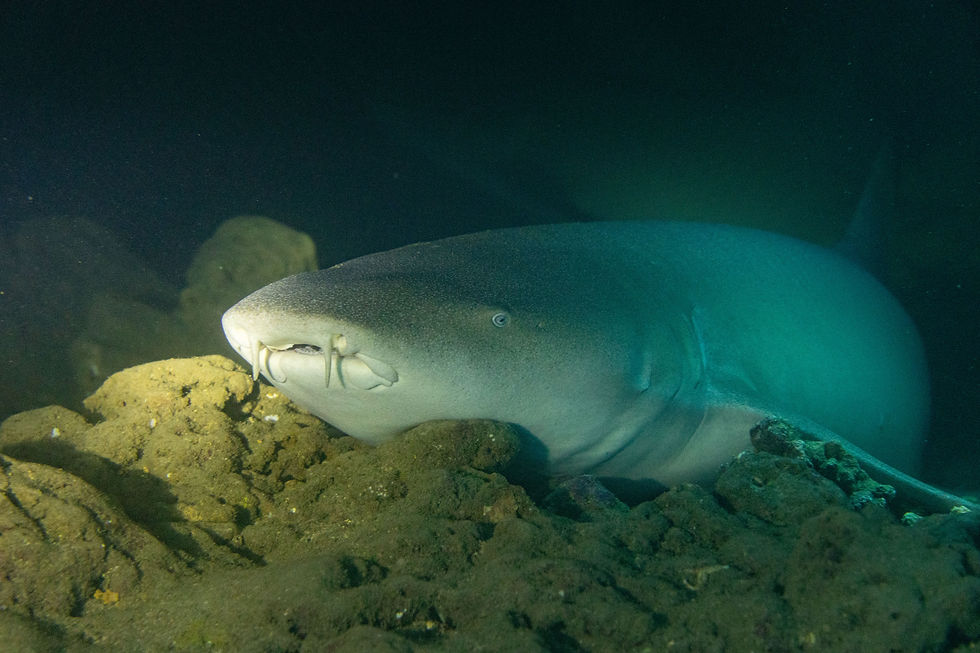
Paruru te Rohoi is a participatory program documenting the presence of the tawny nurse shark around Tahiti. AREMP teams and dive centers collected observations between 0 and 40 meters, while IREMP extended the monitoring to mesophotic zones, enabling the observation of the world’s deepest recorded Rohoi at 85 meters. Together, these data provide a comprehensive view of the tawny nurse shark’s vertical distribution and help improve understanding of its ecology.
Projects we support
Deep Sea Spawning
Project holder: Tamano Te Tairoto
Deep-diving operations: IREMP
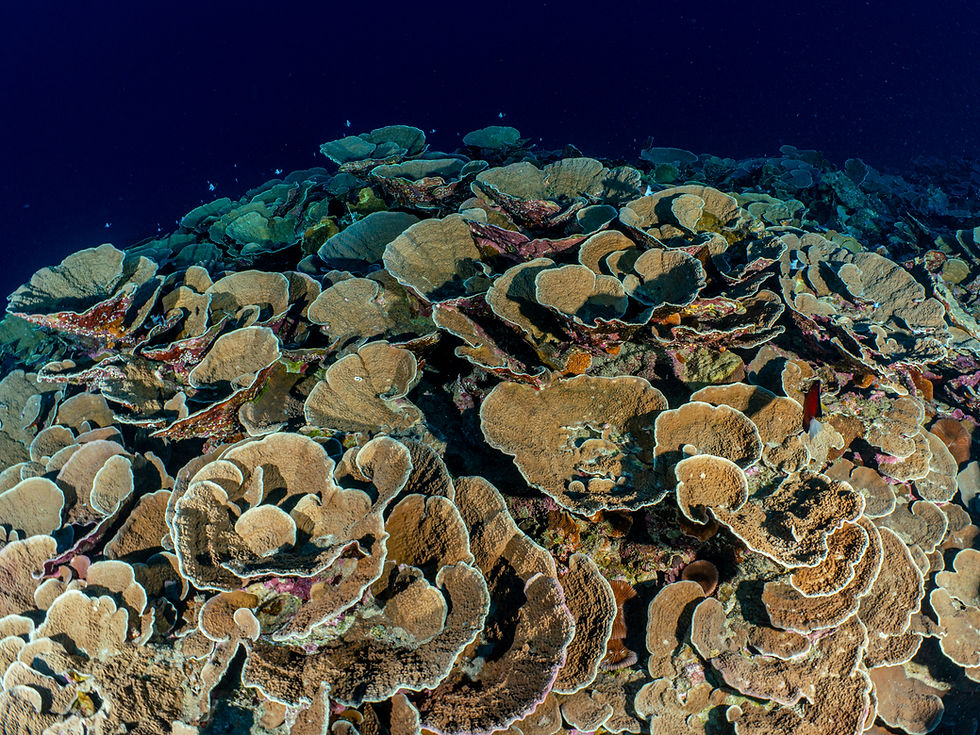
During the spawning of Porites rus corals, IREMP conducts observations in the mesophotic zone (40–80 m) to document this phenomenon in complex habitats. Through technical rebreather dives, we compare the characteristics of spawning at depth — timing, intensity, and presence or absence of spawning — with those observed on shallower reefs.
This approach helps improve understanding of potential differences between reef zones and assess the role of mesophotic communities in coral reproduction and resilience in Polynesia.
.jpg)